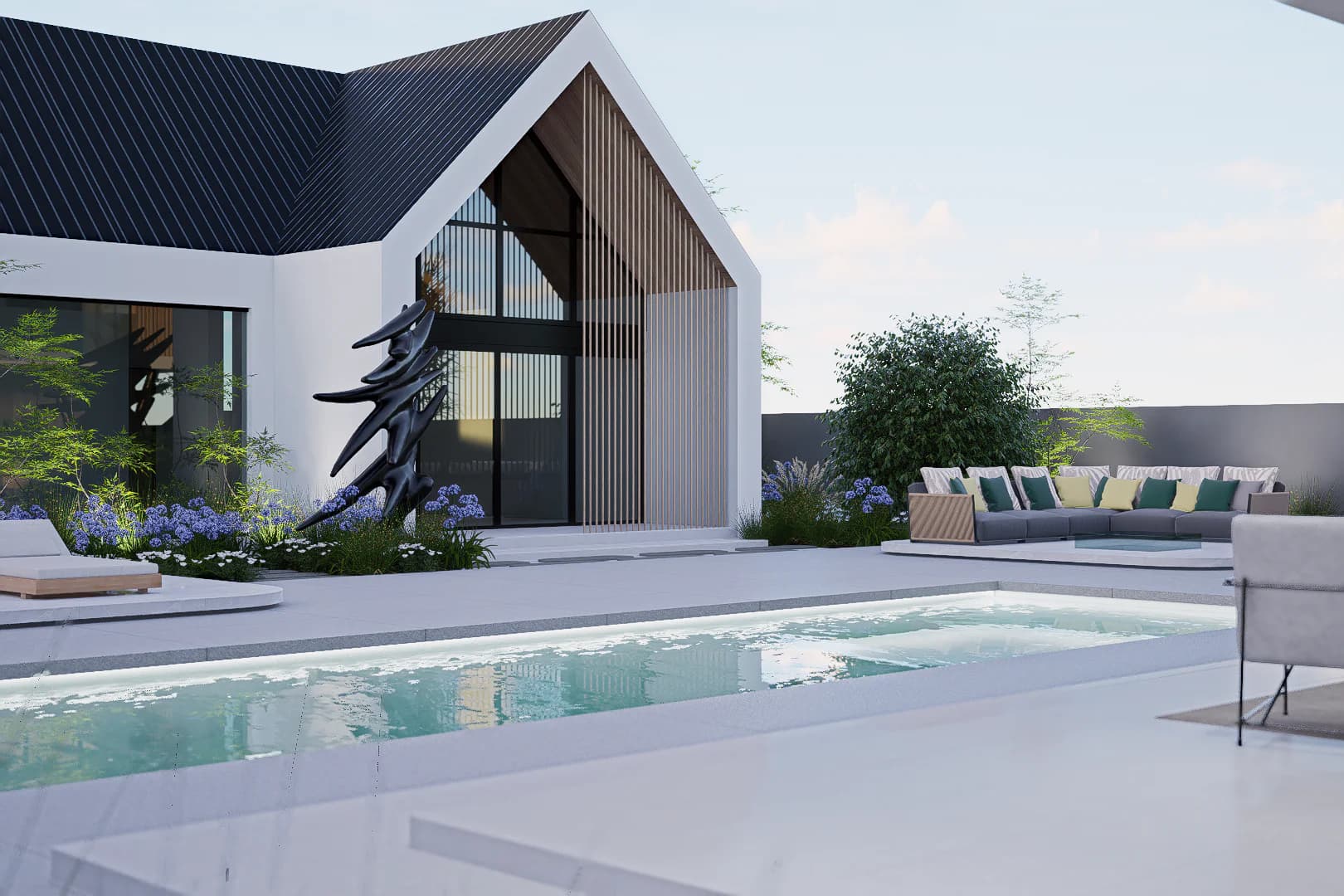
Sustainable Luxury: Achieving Net-Zero in High-End Residential Design
Article
Uncompromising Sustainability and Total Independence
I frequently get asked if building an off-grid, sustainable home means sacrificing high-end amenities or living in a compromised state. The answer is a definitive no. Today, sustainable luxury is the absolute pinnacle of architectural achievement. We design homes that produce as much energy as they consume, offering complete independence and resilience without compromising a single ounce of comfort. It is about future-proofing your most valuable asset.
The Anatomy of a Net-Zero Luxury Home
Achieving true net-zero requires a intensely practical, systems-driven approach to design from day one. You can't tack sustainability on at the end; it has to be the foundation. We integrate advanced eco-technologies silently into the fabric of the building.
Photovoltaic & BESS Integration: We design bespoke solar arrays paired with heavy-duty Battery Energy Storage Systems (BESS). This ensures continuous, clean power, which is essential for remote luxury lodges in areas like Limpopo, but is now increasingly demanded globally for pure energy security.
Passive Thermal Control: Before we even think about relying on active climate control like HVAC systems, we utilize high-performance insulation, low-E triple glazing, and strategic thermal mass to regulate indoor temperatures naturally. We engineer the building envelope to do 80% of the heavy lifting.
Advanced Water Systems: Greywater harvesting, rainwater catchment, and ecological reed bed filtration systems allow us to responsibly manage water. We create closed-loop systems that return water safely to the environment or repurpose it for extensive landscape irrigation.
Materials with a Mission
We source regenerative and recycled materials that carry weight and history. Reclaimed hardwoods, hempcrete, and low-carbon steel not only drastically reduce the ecological footprint of the build, but they add layers of bespoke texture, warmth, and permanence that mass-produced materials simply cannot replicate. When you walk into these spaces, you can physically feel the density and quality of the build.